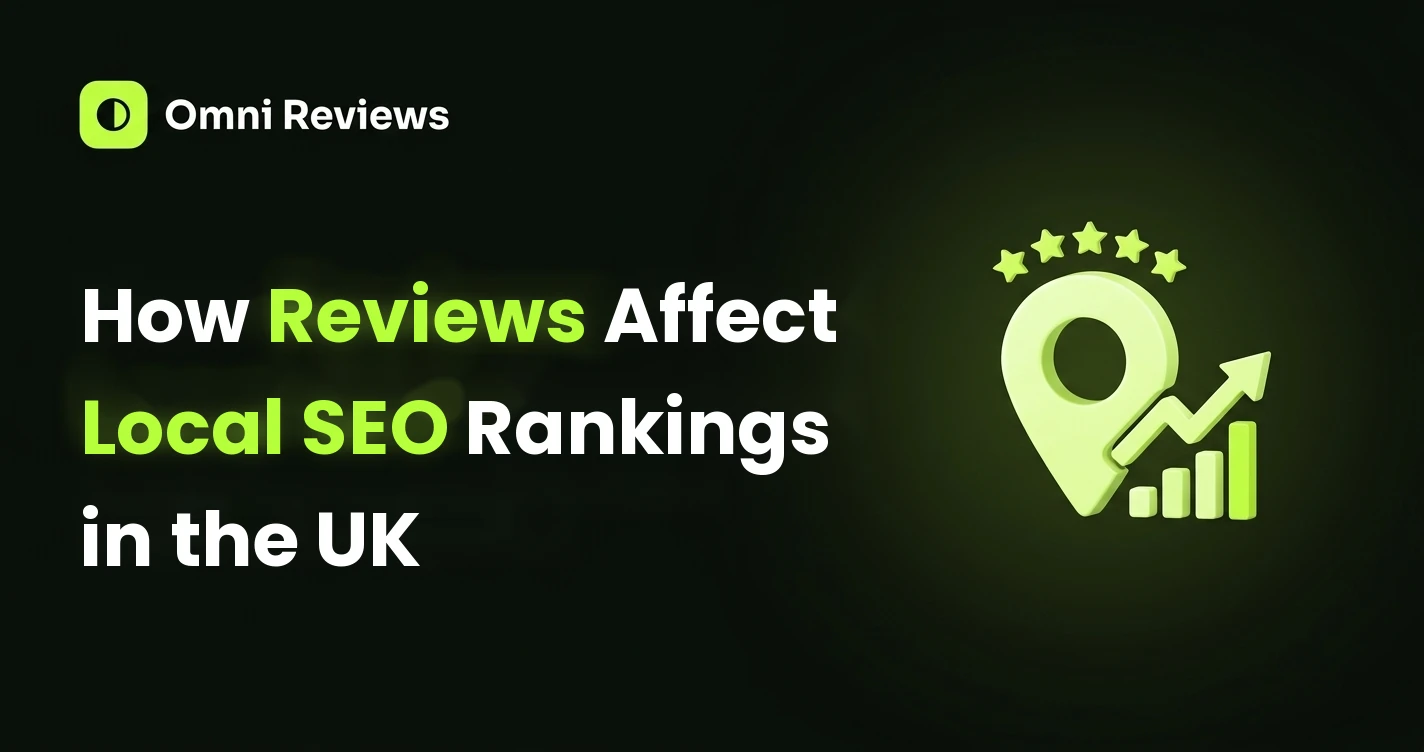
Ask any UK business owner why a competitor keeps appearing above them on the map, and the answer is usually the same: reviews. The link between reviews and local SEO in the UK is strong, yet most guides mention it in one line and move on. This article explains the actual mechanism. You will see how review volume, freshness, and authenticity feed into Google Maps rankings and the local pack. You will also learn which signals matter most and what you can realistically influence.
How Google Decides Who Appears in the Local Pack
The local pack is the block of three businesses and a map that appears for nearby searches. Think "plumber in Leeds" or "dentist near me". Google says local results rely mainly on three factors: relevance, distance, and prominence.
Relevance measures how well your profile matches the search. Distance measures how far you are from the searcher, or from the location named in the query. Prominence measures how well known your business is, and Google states that review count and review score feed into it.
That is where reviews enter the picture. You cannot change relevance or distance quickly. Prominence, however, is something you can build, and reviews are its most visible part.
Where Reviews Sit Among Google Maps Ranking Factors
Google does not publish exact weightings, so the industry relies on expert surveys. Whitespark's Local Search Ranking Factors study is the most widely cited. Its November 2025 edition surveyed 47 local SEO specialists. Those experts attributed roughly 20% of local pack weighting to review signals, second only to Google Business Profile signals.
Treat that figure as informed opinion, not confirmed fact. Whitespark builds the study from practitioner judgement, not from Google's own data. Even so, the direction is clear. Among all Google Maps ranking factors, reviews carry real weight, and their perceived importance has grown in recent editions.
Review signals also break down into several parts. Each one tells Google something different:

Review Volume: Why the Count Still Matters
Volume is the simplest signal. A business with 400 reviews looks more established than one with 12. Both Google and shoppers read it that way.
However, volume matters most when you are behind. Suppose competitors near you hold 200 reviews and you hold 15. Closing that gap is often your single biggest opportunity for local pack ranking reviews. Once you lead comfortably, extra volume adds less than fresh, consistent activity.
Review Freshness SEO: Why Recency Carries So Much Weight
Freshness is the most underrated signal in this list. Darren Shaw, founder of Whitespark, has publicly called review recency one of the most underrated local ranking factors. He places it in his own personal top five.
The logic is simple. A steady stream of new reviews signals a business that is open and serving customers right now. A profile with 300 reviews that all date from 2021 looks dormant. Customers notice this too, and they give recent reviews far more trust than old ones.
Review freshness SEO therefore comes down to velocity. How many new reviews arrive each month? How steady is that pace? A sudden burst followed by silence looks unnatural. A regular, modest flow looks like a real business with real customers.
Authenticity: The Signal You Cannot Fake
Authenticity is where shortcuts backfire. Google runs detection systems that look for suspicious patterns. These include sudden spikes, reviewers with no history, and repeated phrasing. Reviews that get removed stop counting entirely, and the pattern can put your whole profile at risk.
The UK adds a legal layer on top. Since April 2025, the DMCC Act has banned fake reviews. The CMA can fine a business up to £300,000 or 10% of global turnover, whichever is higher. Our DMCC Act guide explains exactly what the law bans and what it allows. A ranking boost from fake reviews therefore carries both a platform risk and a legal one.
Reviews from real customers avoid both problems. They reflect real transactions, so detection systems have nothing to flag. That is why Omni Reviews UK only ever contacts verified customers who have genuinely used your business.
The Proximity Signal: What Reviews Cannot Change
Reviews cannot override geography. The proximity signal still decides a large share of local results. For a "near me" search, a business 200 metres away will often outrank a better-reviewed one five miles away.
What reviews do is strengthen your position within your catchment area. They also help you rank for broader queries where distance matters less. Expect reviews to make you the strongest option nearby. Do not expect them to move your premises.
What UK Businesses Should Do Next
Improving your rankings through reviews does not need complicated tactics. It needs consistency. Work through these steps in order:
- Audit your position. Compare your review count, average rating, and latest review date against the top three local pack businesses in your area.
- Ask every customer. Send a direct review link shortly after a sale or visit, while the experience is fresh.
- Protect your pace. Aim for a steady monthly flow instead of occasional bursts.
- Reply to reviews. Google encourages responses, and they show prospects you are active and attentive.
- Get help if you lack time. If asking customers yourself does not scale, a compliant service can run the outreach for you. You can buy Google reviews UK businesses trust by choosing a provider that only contacts your real customers.
Consistency beats intensity here. A business that collects ten genuine reviews every month will usually outperform one that collects a hundred in a week and then stops. Before you hire anyone to help, run them through our google review provider checklist to spot the red flags early.
Frequently Asked Questions
Do reviews directly affect Google Maps rankings?
Yes. Google confirms that review count and review score contribute to a business's prominence, which is one of its three main local ranking factors.
How many reviews do I need to rank in the local pack?
No fixed number exists. Compare yourself with the top three businesses in your area, then aim to match or exceed their volume and recency.
Does review recency matter more than rating?
Both matter, and neither works alone. A high rating built on old reviews looks stale, while fresh reviews with a poor rating hurt trust.
Can fake reviews improve local rankings?
They may appear to help briefly, but detection systems often remove them. In the UK, they also breach the DMCC Act, so the risk outweighs any short-term gain.
Ready to Grow Your Rankings With Real Customer Reviews?
Every signal in this article points the same way. Volume builds credibility, recency proves you are active, and authenticity keeps your gains from disappearing. Only real customer feedback delivers all three together.
Want your rankings to reflect real reviews? Start with Omni Reviews. If you are comparing providers, see why we are the best place to buy Google reviews UK businesses can rely on.