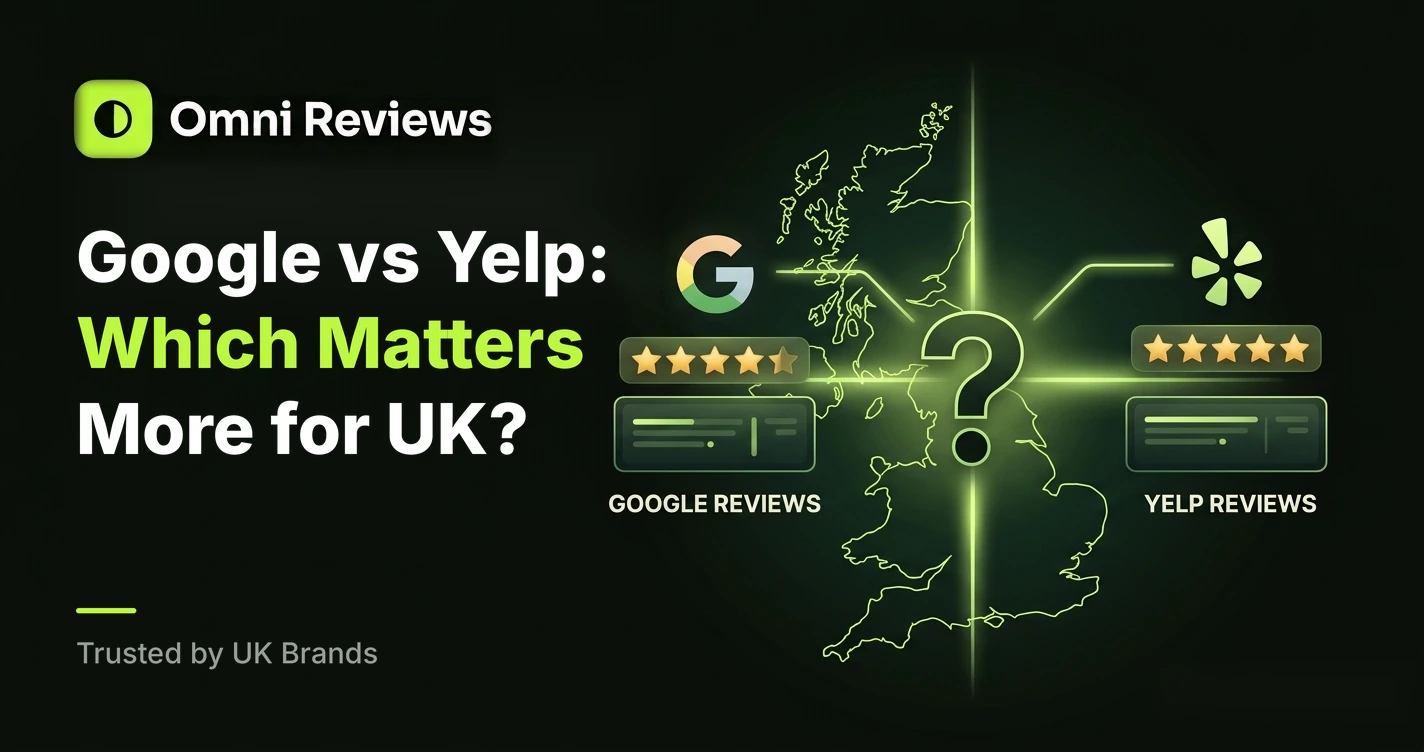
If you are comparing Google reviews vs Yelp reviews, you are probably short on time and unsure where to spend it. Both platforms show star ratings. Both influence customers. Yet they do not carry the same weight in the UK. This guide compares them on the things that matter: how UK customers search, how each platform affects local rankings, and how their rules differ. By the end, you will know where to focus first.
Which Platform Wins for UK Businesses?
For most UK businesses, Google comes first. Google Business Profile reviews appear in Search, in Google Maps, and in the local pack, which is where most nearby customers start. Yelp still matters in some sectors, but its UK audience is far smaller than Google’s.
That does not mean you should ignore Yelp. It means you should build your foundation on Google, then add Yelp if your customers use it.
How UK Customers Actually Search
UK search behaviour leans heavily towards Google. When someone needs a plumber, a dentist, or a restaurant, they usually type the need into Google. They then see a map with three businesses and a set of star ratings.
That moment decides a lot. Customers rarely leave the results page to compare review sites. They read the stars and the review count they see in front of them. A business with strong Google reviews wins that comparison before a customer ever opens another platform.
Yelp works differently. People tend to visit it on purpose, often to browse restaurants or services. That makes it useful in certain categories, but it reaches fewer UK customers than Google does.
Google Business Profile Reviews: What They Influence
Your Google Business Profile is the listing that appears across Google Search and Google Maps. Reviews sit at the centre of it.
Google says local results rely on three main factors: relevance, distance, and prominence. Review count and review score feed into prominence. In other words, reviews on your profile help decide whether you appear in the local pack ranking at all.
Google reviews also shape the decision after the click. Shoppers read recent reviews, check your average, and look at how you reply. A strong profile reassures them quickly.
Freshness matters too. A steady flow of new reviews tells Google and customers that your business is active today. Our guide on how reviews affect local SEO rankings explains this in more depth.
Yelp Business Page Reviews: Where Yelp Still Fits
A Yelp Business Page works as a separate listing with its own audience. In the UK, Yelp tends to matter most for restaurants, cafés, salons, and some home services, where customers browse and compare.
Yelp also behaves differently from Google. Its recommendation software decides which reviews appear prominently, and it filters reviews it considers less reliable. Business owners often find this frustrating, because a genuine review can still land in the “not recommended” section.
Yelp’s view on soliciting reviews matters as well. Its guidelines tell businesses not to ask for reviews, and its software may not recommend reviews that look prompted. Google takes a different line. It allows you to request reviews, as long as you offer no incentives and ask all customers fairly.
So Yelp rewards a quieter approach. Make your business easy to find on the platform, deliver good service, and encourage genuine, unprompted feedback. Building Authentic Yelp Reviews UK businesses can keep takes patience and care, because shortcuts tend to get filtered.
Google Reviews vs Yelp Reviews: Side-by-Side
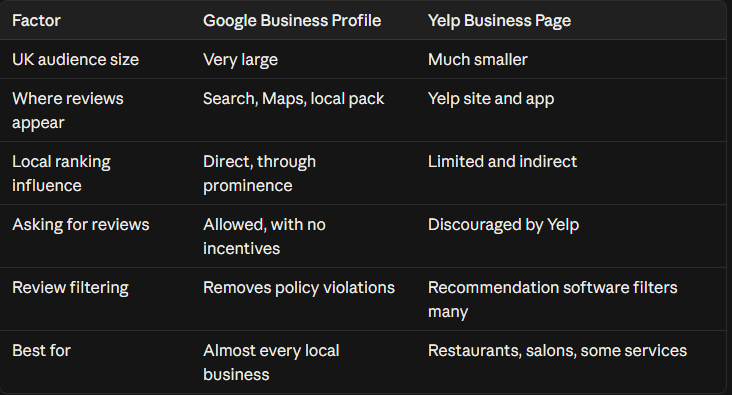
This review platform comparison makes the pattern clear. Google offers reach and ranking impact. Yelp offers a focused audience in specific categories.
Which Local SEO Review Platforms Move Rankings?
When people ask which review platform matters most in the UK, they often mean rankings. Here the gap is wide.
Google reviews feed directly into Google’s own local results. Google says review count and score contribute to local ranking, so more genuine, recent reviews can improve your chances of appearing in the local pack.
Yelp reviews work differently. A Yelp listing can appear in some search results, and it adds another trusted profile for your business. However, it does not influence the Google local pack in the same direct way. Treat Yelp as a supporting channel for visibility and credibility, not as your main ranking tool.
For local SEO review platforms, the order is simple: Google first, then the platforms your customers actually use.
Both Platforms Fall Under UK Law
One point applies to both. UK law does not care which platform a review sits on. Since April 2025, the DMCC Act has banned fake reviews and reviews that hide an incentive. Our DMCC Act guide explains exactly what the law bans and what it allows. The Competition and Markets Authority can fine a business up to £300,000 or 10% of global turnover, whichever is higher.
That means fake or purchased reviews carry the same legal risk on Yelp as on Google. Only reviews from real customers who used your business keep you safe on both. Honest feedback also holds up better when platforms run their detection checks.
Which Platform Should You Focus On First?
Use your business type to decide:
- Trades, clinics, and local services: Start with Google. Customers search for you directly, and the local pack drives most enquiries.
- Restaurants and cafés: Build Google first. Then add Yelp, because diners often compare options there.
- Salons and spas: Prioritise Google, then consider Yelp if customers in your area already use it.
- Online-first or national brands: Google still helps with brand searches, but review platforms such as Trustpilot may deserve attention too.
If you are unsure, check your own data. Ask new customers how they found you. Look at where your competitors have the most reviews. Those two answers usually point to the right platform.
Common Mistakes When Comparing Platforms
Many owners make the same errors:
- Spreading effort too thin. Chasing every platform at once usually produces weak results on all of them.
- Ignoring review freshness. Old reviews lose value, so a steady flow beats a single burst.
- Treating Yelp like Google. Yelp’s rules differ, so a Google-style request campaign can backfire there.
- Chasing ratings instead of authenticity. Real reviews last longer than manufactured ones.
Avoid these, and your comparison becomes far more useful.
A Simple Plan to Get Started
You do not need a complicated strategy. Follow this order:
- Claim and complete your Google Business Profile.
- Ask real customers for honest reviews shortly after each sale or visit.
- Reply to every review, positive or negative.
- Add Yelp if your sector and customers use it, and follow its guidelines carefully.
- Review your progress monthly, and adjust.
If time is tight, a compliant service can handle outreach for you. When you are ready to buy Google reviews UK businesses can rely on, choose a provider that only contacts your own verified customers.
Frequently Asked Questions
Which matters more for UK businesses, Google or Yelp?
Google matters more for most UK businesses. It reaches far more customers and feeds directly into local pack rankings. Yelp helps in specific sectors, such as restaurants and salons.
Do Yelp reviews help Google rankings?
Not directly. Yelp reviews support your credibility and visibility, but Google’s local ranking relies mainly on your Google Business Profile.
Can I ask customers for Google reviews?
Yes. Google allows you to request reviews, as long as you offer no incentives and ask customers fairly. Yelp takes a stricter view and discourages asking.
Should I use both platforms?
Often yes, but in order. Build Google first, then add Yelp if your customers use it.
Does UK law apply to Yelp reviews as well?
Yes. The DMCC Act covers fake reviews on any platform, including Yelp and Google.
Not Sure Where to Start?
The right answer depends on your business, but the pattern is consistent. Google gives you reach and ranking power. Yelp gives you a focused audience in the right sectors. Real customer reviews protect you on both.
Ready to build your reputation? Contact with Omni Reviews and get a clear plan for Google & Yelp.